WHAT IS SCLERODERMA?
ABOUT SCLERODERMA
With your help we're making progress in understanding the disease, getting patients diagnosed earlier and finding better treatment options. Here are some commonly asked questions.
What is it?
Scleroderma (skleer-uh-DUR-muh) is an autoimmune disease, like multiple sclerosis and lupus, in which a person's body attacks its own tissue. Scleroderma, which means "hard skin," can cause thickening and tightening of the skin. It can also cause serious damage to the internal organs such as heart, lungs and kidneys. There are many types and severities.
How serious is scleroderma?
The symptoms vary greatly from person to person, and the effects of scleroderma can be life-threatening. The seriousness will depend on what parts of the body are affected and the extent to which they are affected. Scleroderma is not contagious, it is not infectious, it is not cancerous or malignant.
How is scleroderma diagnosed?
Unfortunately, many patients with scleroderma are initially misdiagnosed. We need to create awareness even amongst doctors! Patients may require consultation with rheumatologists (arthritis specialists), and/or dermatologists (skin specialists).
What causes scleroderma?
The exact cause of scleroderma is still unknown, but scientists and medical investigators in a wide variety of fields are working hard to make those determinations. That's why we need research!
Who does scleroderma affect?
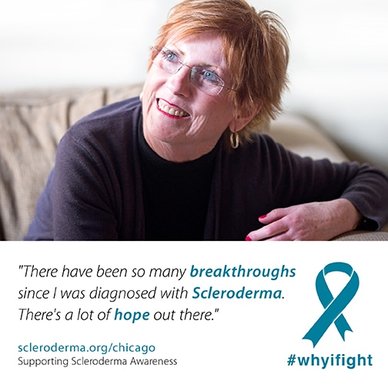
Scleroderma affects more than 300,000 men, women and children. Approximately 75% of patients are women.
Is there a cure?
At the present time, there is no cure for scleroderma. Another reason we need research!
What will the funds raised support?
All net proceeds from Food Fight will be donated to the Scleroderma Foundation to support its three-fold mission of SUPPORT, EDUCATION and RESEARCH. Learn more at www.scleroderma.org.
|
|
WHO DOES SCLERODERMA AFFECT?
WHY WE CREATED FOOD FIGHT
Two daughters on a mission!
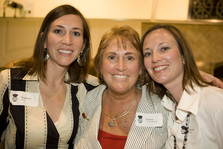
Our mom was suddenly diagnosed with scleroderma in 2005. It was only after a great deal of persistence and personal research that mom received the correct diagnosis. Even some doctors knew little of the disease. She was told she had five years to live.
Our first thoughts were "what the heck is scleroderma?" and "there's no way she only has five years to live." We quickly learned the severity of this disease and the lack of treatment available to patients. We wanted to do something about it, so we started Food Fight to help raise money and awareness.
The effects of the disease vary from person to person, but in mom's case it affected her internal organs and progressed very rapidly. Unfortunately, mom lost her fight with scleroderma in 2010 after struggling for a month in the hospital and ICU.
Our mom showed amazing determination and resilience, even through the worst of times. She had a great sense of humor. She loved cooking and she loved her family and friends. Food Fight celebrates all of these things. We continue to carry out this event as a tribute to our incredible mother and in the process we hope to create a better future for others who live with this disease everyday.
We cannot thank you enough for your continued support.
Stephanie & Jennifer
Our first thoughts were "what the heck is scleroderma?" and "there's no way she only has five years to live." We quickly learned the severity of this disease and the lack of treatment available to patients. We wanted to do something about it, so we started Food Fight to help raise money and awareness.
The effects of the disease vary from person to person, but in mom's case it affected her internal organs and progressed very rapidly. Unfortunately, mom lost her fight with scleroderma in 2010 after struggling for a month in the hospital and ICU.
Our mom showed amazing determination and resilience, even through the worst of times. She had a great sense of humor. She loved cooking and she loved her family and friends. Food Fight celebrates all of these things. We continue to carry out this event as a tribute to our incredible mother and in the process we hope to create a better future for others who live with this disease everyday.
We cannot thank you enough for your continued support.
Stephanie & Jennifer